Technical controls that support compliance
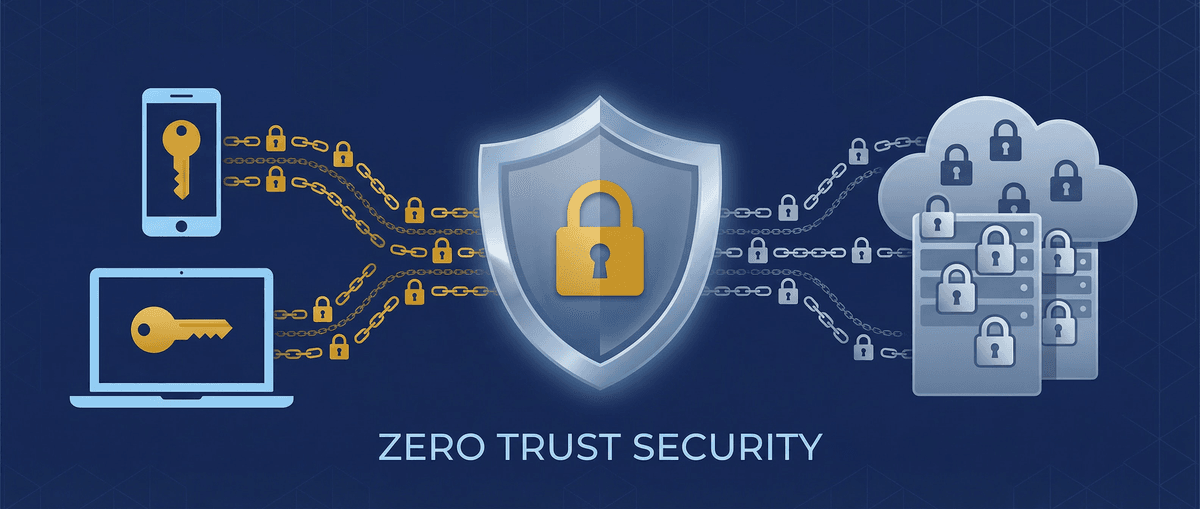
MindooDB provides cryptographic building blocks — end-to-end encryption, signed append-only history, and coordinated data erasure — that address key technical requirements of common regulatory frameworks. Compliance itself is an organizational responsibility; MindooDB gives you a strong foundation to build on.
Compliance by regulation
Health Insurance Portability and Accountability Act requires patient data protection, access controls, and audit trails.
- End-to-end encryption ensures patient data is never visible to servers
- Signed write history — every change is Ed25519-signed, proving who wrote what and when
- Fine-grained access control with named keys for different care teams
- Data retention strategies via time-sharded databases and archival
- Offline operation for field healthcare workers and remote clinics
⚠️ HIPAA also requires read-access logging, BAAs, administrative safeguards, and physical security — these are your responsibility to implement around MindooDB.
Sarbanes-Oxley Act requires financial audit trails, immutable records, and access controls.
- Immutable records through append-only architecture
- Cryptographic integrity — hash-chained entries prove records haven't been altered
- Complete write history with signed authorship for audit requirements
- Time travel to reconstruct any historical state
- Signed changes prove authorship of all modifications
⚠️ SOX also requires internal controls, management certifications, and segregation of duties — these are organizational responsibilities.
General Data Protection Regulation requires right to be forgotten, data portability, consent tracking, and data protection by design.
- Coordinated data erasure —
purgeDocHistory()propagates deletion requests via the directory DB to all synced clients - Data portability through document export capabilities
- Data protection by design through end-to-end encryption
- Write audit trail — signed, append-only history of all data changes
⚠️ Purge requests reach clients on their next directory sync — devices that never reconnect retain the data. GDPR also requires consent management, DPO appointment, and processing records — these are your responsibility.
Payment Card Industry Data Security Standard requires payment card data protection, access controls, and audit trails.
- Strong encryption — AES-256-GCM at rest, per-user RSA in transit
- Access controls with named keys for restricted access to sensitive data
- Write audit trail — signed, append-only history of all data changes
⚠️ PCI-DSS is a comprehensive standard covering network segmentation, vulnerability management, monitoring, and more. MindooDB addresses the encryption and access control requirements — the rest is your responsibility. Consider whether you need to store card data at all.
Technical controls provided by MindooDB
- ✅ Complete write history (append-only)
- ✅ Cryptographic signatures (authorship proof)
- ✅ Tamperproof records (hash-chained)
- ✅ Time travel (reconstruct any state)
- ✅ Timestamped changes
- ✅ Client-side encryption (AES-256-GCM)
- ✅ Fine-grained access control (named keys)
- ✅ Key management (password-protected KeyBag)
- ✅ Coordinated data erasure (directory-propagated purge)
- ✅ Data sovereignty (client-side tenants)
- ⚙️ Read-access logging (application layer)
- ⚙️ Consent management (application layer)
- ⚙️ Role-based access control (using named keys)
- ⚙️ Data retention policies (using time-sharding)
- ⚙️ Compliance reporting (using audit data)
Complete write history
- Every write is cryptographically signed with the author's Ed25519 key
- Timestamps are included in every change entry
- Document history can be traversed with
iterateDocumentHistory() - Time travel allows reconstructing any historical state
- Deletions are marked with tombstones (preserving history)
Note: MindooDB automatically logs writes (who changed what). Read access logging (who viewed what) must be implemented at the application level.
- Prove who changed what and when
- Reconstruct state at any point in time
- Demonstrate data integrity to auditors
- Build application-level read-access logging on top
- Support legal discovery requirements
Retention policies and archival
- Time-based sharding — Create databases by time period (yearly, monthly)
- Archival databases — Move old data to read-only archive databases
- Document lifecycle — Mark documents as archived instead of deleting
- Coordinated purge — Admin-signed purge requests propagate via directory DB; clients execute on next sync
- Append-only nature means data accumulates over time
- Plan for growth management from the start
- Use time-based sharding for efficient archival
- Consider retention requirements per document type
- Coordinated purge propagates to synced clients; offline devices retain data
Compliance feature matrix
| Requirement | HIPAA | SOX | GDPR | PCI-DSS |
|---|---|---|---|---|
| Data encryption | ✅ E2E encryption | ✅ E2E encryption | ✅ E2E encryption | ✅ E2E encryption |
| Encryption-based access control | ✅ Named keys | ✅ Named keys | ✅ Named keys | ✅ Named keys |
| Write audit trail | ✅ Signed, append-only | ✅ Signed, append-only | ✅ Signed, append-only | ✅ Signed, append-only |
| Data integrity | ✅ Hash-chained | ✅ Hash-chained | ✅ Hash-chained | ✅ Hash-chained |
| Data erasure | ⚠️ Coordinated purge | N/A | ⚠️ Coordinated purge* | N/A |
| Read-access logging | ⚙️ You build | ⚙️ You build | ⚙️ You build | ⚙️ You build |
| Consent management | N/A | N/A | ⚙️ You build | N/A |
✅ = built-in ⚠️ = built-in with caveats ⚙️ = you implement at application level
* Purge requests propagate via directory DB to all synced clients. Devices that never reconnect retain the data.
For detailed implementation patterns, see the compliance patterns documentation.